Why You Keep Paying Late Fees (When You Had the Money)
The money was in the account. You knew the bill existed. You may even have looked at it, thought "I'll do that tonight," and meant it. It was late anyway, there's a fee on top now, and the fee is somehow more annoying than the bill was.
If that keeps happening, you don't have a maths problem or a money problem. You have an admin problem wearing a money problem's coat.
Paying a bill is not one task
"Pay the electricity bill" sounds like a single action. It's actually: find the email, find the amount, find the card, find the login, fail the login, reset the password, wait for the code, type the code, and then, finally, the ten seconds of actually paying. Every one of those is a chance to get derailed, and any of them can be the point where you close the tab and decide to be a functional person about it later.
So the fee isn't the price of not having money. It's the price of a nine-step task disguised as a one-step task.
Why "just remember" was never going to hold
The fallback plan is usually intending harder. But an intention has to survive the gap between now and the deadline, competing with everything else your working memory is already carrying. Bills are also the perfect shape for slipping through: boring, not urgent today, no consequence until suddenly there is one.
There's a part nobody says out loud, too. Once a bill is slightly late it becomes slightly unpleasant to look at, so you look at it less, so it gets later, so it becomes more unpleasant. Plenty of unopened envelopes are avoidance rather than disorganisation, and calling that laziness just keeps the loop turning.
Fixes that survive a bad week
Anything that needs you to remember, on the right day, in the right mood, isn't a fix. It's another opportunity to fail. What works is taking yourself out of the loop.
Autopay anything with a fixed shape. Rent, phone, insurance, utilities. Yes, you lose a little oversight. You were not exercising that oversight, and the fees cost more than the theoretical control was worth.
One buffer account. Autopay only fails when the money isn't there, so keep a small float in whichever account it draws from. Not a budgeting system, just a cushion, so a bad week doesn't become a returned payment and a second fee.
Do the nine steps once. Sort the password, save the login, store the card. Most of that friction is one-time friction you keep paying because you keep meeting it fresh.
One weekly five-minute pass. Same day, same drink, whatever autopay didn't cover. Five minutes is short enough to actually happen. The monthly hour-long "sort out my finances" session is not going to happen, and you know it.
Then find out what it actually cost
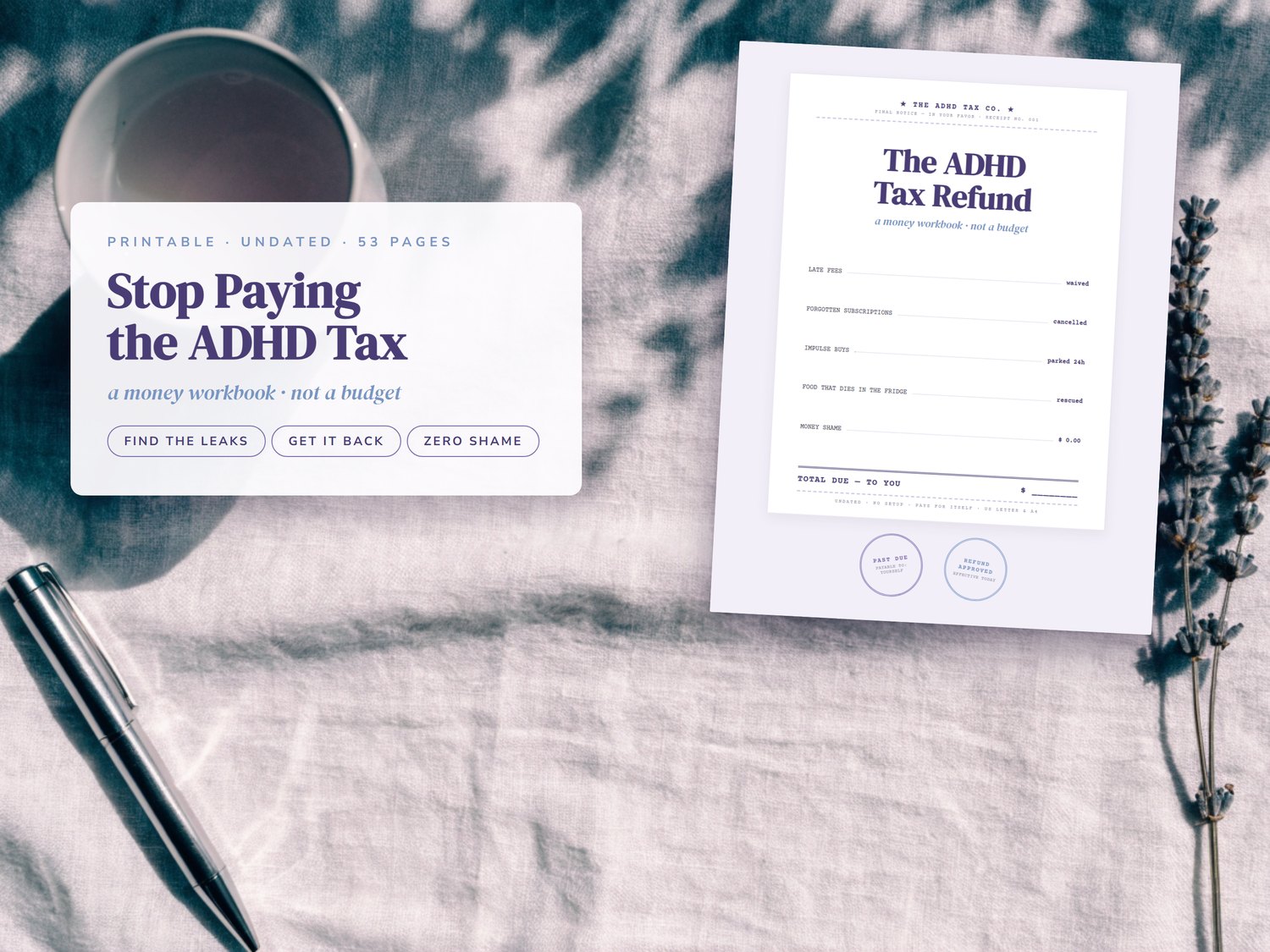
Late fees rarely travel alone. They come with the forgotten subscription, the thing bought twice because the first one was lost, the food that died in the drawer, the return that missed its window. Individually each is small and mildly embarrassing. Added up across a year they tend to be startling, and that total is worth having, because a number is easier to act on than a vague sense of leaking.
Not to feel bad about. To find the two or three lines that account for most of it, fix those, and let the rest go.